Native Forests of the North Island: A Field Guide
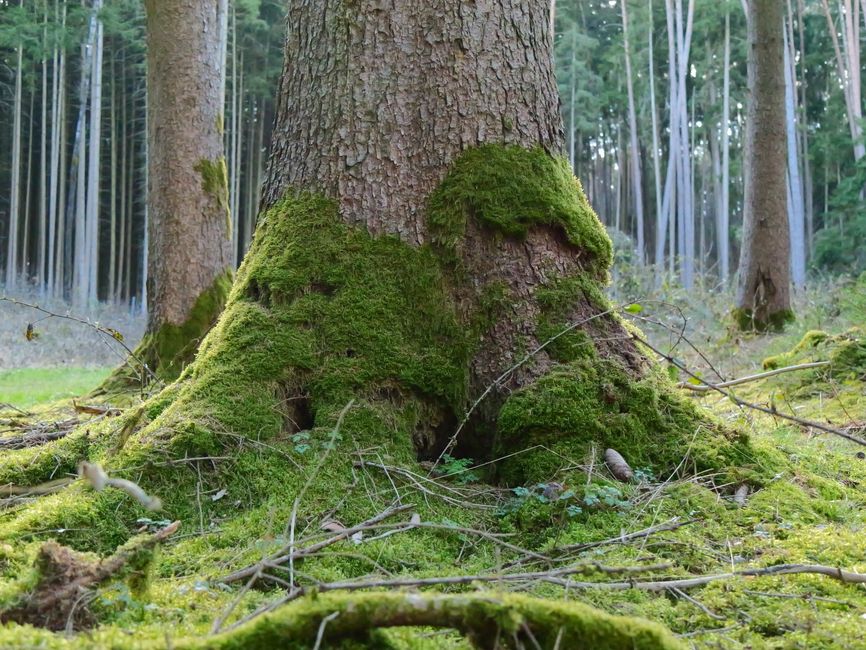
The native forests of New Zealand’s North Island present a diverse mosaic of podocarp, beech, and mixed communities shaped by altitude, rainfall, soil, and disturbance history. Understanding these forest types requires attention to both overstorey composition and the structural layers beneath. This field guide outlines the principal forest classes found across the central North Island, with a focus on canopy architecture, common understory species, and the ecological processes that maintain them.
Observers moving from lowland valleys to montane slopes encounter gradual shifts in species dominance. Podocarp-broadleaf forests often occupy fertile, lower-elevation sites, while beech forests become more prevalent on cooler, higher ground and in areas with well-drained soils. The transition between these types is rarely abrupt; instead, mosaics and ecotones reflect local topography, climate gradients, and historical events such as volcanic activity, land clearance, and logging.
This guide does not attempt to replace detailed botanical keys or local expertise. Rather, it provides a framework for recognising major forest patterns and interpreting the composition of canopy and understory layers. Field identification should always be complemented by regional checklists, iNaturalist observations, and consultation with local botanists or ecologists.
Podocarp Forest Types
Podocarp forests are characterised by the presence of conifers from the family Podocarpaceae, notably rimu (Dacrydium cupressinum), miro (Prumnopitys ferruginea), totara (Podocarpus totara), kahikatea (Dacrycarpus dacrydioides), and matai (Prumnopitys taxifolia). These species often form the emergent or upper canopy, rising above a diverse tier of broadleaf trees such as tawa (Beilschmiedia tawa), kamahi (Weinmannia racemosa), and rewarewa (Knightia excelsa). The resulting structure is typically multi-layered, with a dense subcanopy and a rich understory of ferns, shrubs, and juvenile trees.
Kahikatea dominates swampy, poorly drained sites, forming distinctive forest types on alluvial plains and floodplains. Rimu and miro are more common on well-drained terraces and hillslopes, where they may co-occur with northern rata (Metrosideros robusta) and a variety of epiphytes. Totara and matai often occupy drier, frost-prone sites, including valley floors and lower slopes. In the central North Island, podocarp forests are particularly prominent in the King Country, the Wanganui hinterland, and parts of the Bay of Plenty and Volcanic Plateau margins.
Canopy structure in podocarp forests varies with age and disturbance history. Old-growth stands exhibit a broken, emergent canopy with large, long-lived conifers towering above angiosperm trees. Gaps created by treefall allow light to reach the forest floor, promoting regeneration of both podocarps and broadleaves. In contrast, secondary podocarp forests regenerating after logging or clearance often have a more uniform canopy dominated by fast-growing broadleaves, with podocarps scattered as emergents or saplings. Recognising these structural differences is essential for interpreting forest condition and successional status.
Understory composition in podocarp forests reflects moisture, fertility, and light availability. Common ferns include silver fern (Cyathea dealbata), wheki (Dicksonia squarrosa), and hen and chickens fern (Asplenium bulbiferum). Shrub species such as Coprosma, Pseudopanax, and Myrsine are widespread, while juvenile trees of tawa, kamahi, and podocarps contribute to a dense regeneration layer. Ground covers may include mosses, liverworts, and herbaceous species like Astelia and Uncinia. The overall impression is one of high diversity and structural complexity.
Beech Forest Types and Transitions
Beech forests in the North Island are dominated by species of the genus Fuscospora and Lophozonia, principally red beech (Fuscospora fusca), silver beech (Lophozonia menziesii), black beech (Fuscospora solandri), and hard beech (Fuscospora truncata). These forests typically occur on cooler, higher-elevation sites, on well-drained soils, and in areas with lower fertility or reduced moisture. In the central North Island, beech forests are prominent in the Kaimanawa, Ruahine, and Urewera ranges, as well as parts of the Volcanic Plateau.
Canopy structure in beech forests is often more uniform than in podocarp forests, with a single dominant tier of beech trees and a less developed emergent layer. However, variations occur depending on species composition and site conditions. Pure stands of silver beech are common at higher elevations, while mixed beech forests with red and black beech occupy mid-slope positions. The understory in beech forests tends to be sparser than in podocarp forests, although localized pockets of diversity occur in gullies and along forest edges.
Common understory plants in beech forests include species adapted to lower light and cooler temperatures. Ferns such as Blechnum discolor and Blechnum procerum are frequent, along with shrubs like Coprosma microcarpa, Coprosma depressa, and Gaultheria antipoda. Juvenile beech trees may form a dense sapling layer, particularly in canopy gaps. Ground covers include mosses, lichens, and herbaceous species such as Ranunculus and Anemone. The overall appearance is often more open and less lush than podocarp-broadleaf forest.
Transitions between podocarp and beech forest types are influenced by environmental gradients and disturbance regimes. Beech species may invade podocarp forests following disturbance, particularly where seed sources are nearby and conditions favour beech establishment. Conversely, podocarp-broadleaf species may persist in beech-dominated landscapes on more fertile or moist sites. These dynamics create complex mosaics that require careful observation to interpret. A field guide should therefore emphasise the importance of site context, including altitude, drainage, and history.
Canopy Structure and Layering
Canopy structure in North Island native forests can be described in terms of vertical layers: emergent, canopy, subcanopy, shrub, and ground tiers. In podocarp forests, the emergent layer is often conspicuous, with large conifers extending above the main canopy. The canopy itself may be dominated by broadleaf trees such as tawa, kamahi, and rewarewa, creating a dense, continuous cover. The subcanopy contains small trees and tall shrubs, while the shrub and ground layers support ferns, seedlings, and herbaceous plants.
Beech forests typically exhibit a simpler vertical structure, with fewer emergents and a more uniform canopy. The subcanopy may be less developed, and the shrub layer can be sparse. However, structural complexity increases in gullies, along edges, and in areas of recent disturbance. Light availability is a key driver of layering; dense canopies reduce light penetration, limiting understory growth, while gaps and edges promote regeneration and diversity.
Field observers can assess canopy structure by estimating the height and cover of each layer, noting the presence of emergents, and recording the abundance of epiphytes and lianes. In podocarp forests, epiphytes such as Astelia and Collospermum are common, as are climbing species like Metrosideros and Ripogonum. In beech forests, epiphyte loads are generally lower, although lichens and mosses may be abundant on trunks and branches. These structural attributes provide valuable insights into forest health and ecological processes.
Common Understory Plants
The understory of North Island native forests supports a remarkable diversity of ferns, shrubs, and herbaceous plants. In podocarp-broadleaf forests, silver fern (Cyathea dealbata) and wheki (Dicksonia squarrosa) are iconic, often forming dense stands in damp, shaded sites. Other common ferns include hen and chickens fern (Asplenium bulbiferum), shining spleenwort (Asplenium oblongifolium), and hanging spleenwort (Asplenium flaccidum). Shrub species such as Coprosma robusta, Coprosma lucida, and Pseudopanax crassifolius are widespread, along with introduced species in disturbed areas.
In beech forests, understory composition shifts toward species tolerant of cooler, drier conditions. Blechnum discolor and Blechnum procerum are characteristic ferns, while shrubs like Coprosma microcarpa, Coprosma depressa, and Gaultheria antipoda are frequent. Juvenile beech trees often dominate the regeneration layer, and ground covers include mosses, lichens, and herbaceous species such as Ranunculus and Anemone. The overall diversity may be lower than in podocarp forests, but local variation occurs in response to microclimate and soil moisture.
Across both forest types, the understory provides critical habitat for native fauna, including birds, invertebrates, and lizards. Fruit-producing shrubs such as Coprosma and Pseudopanax are important food sources for birds like tui, bellbird, and kereru. Ferns and other ground covers contribute to forest floor structure and nutrient cycling. A field guide should encourage observers to record understory composition, as it reflects both site conditions and ecological interactions.
Field Identification and Observation
Identifying forest types in the field requires a combination of skills: recognising canopy dominants, interpreting structural layers, and noting indicator species in the understory. Start by scanning the canopy for emergent conifers or uniform beech crowns. Then examine the subcanopy and shrub layers for characteristic species. Ground covers and epiphytes can provide additional clues about moisture, light, and disturbance history. Recording these observations systematically, perhaps using a standardized form or mobile app, enhances the value of field data.
It is important to consider the limitations of field identification. Many species are variable, and hybrids occur, particularly among podocarps and beeches. Environmental gradients can produce gradual transitions that defy simple classification. Local knowledge and reference collections are invaluable for resolving ambiguities. Observers should also be mindful of seasonal changes, as flowering, fruiting, and leaf phenology can affect detectability. Repeated visits to the same site over time can reveal successional trends and responses to disturbance.
Finally, ethical and safety considerations apply. Always obtain permission before entering private land, respect cultural sites, and follow biosecurity protocols to prevent the spread of pathogens such as kauri dieback and myrtle rust. Wear appropriate clothing and footwear, carry a map and compass, and inform someone of your plans. By combining careful observation with responsible practice, field naturalists can contribute to the understanding and conservation of North Island native forests.